

Performance Management Systems: The Complete Guide
Performance management systems shape how organizations set expectations, track progress, and develop their people. Yet 95% of managers say they're dissatisfied with how their company handles performance management, and employees rank performance reviews as their second-least favorite workplace activity — right after firing someone.
The gap between what performance management should do and what it actually delivers is wide. Companies with effective systems are 4.2x more likely to outperform their peers in revenue growth, yet most organizations still rely on outdated annual review cycles that frustrate everyone involved.
This guide covers everything you need to know about performance management systems — what they are, how they work, their key components, and how to choose the right one for your organization. Whether you're building a system from scratch or replacing one that isn't working, you'll find actionable guidance backed by research and real-world examples.
What Is a Performance Management System?
A performance management system is a structured framework that organizations use to set goals, monitor progress, provide feedback, and evaluate employee performance. It connects individual work to company strategy through a continuous cycle of planning, coaching, and assessment.
Think of it as the operating system for how your organization develops people and drives results. Rather than a single annual event, a modern performance management system creates an ongoing conversation between managers and employees that keeps everyone aligned and growing.
Performance management system vs. performance appraisal
These terms are often used interchangeably, but they're different things. A performance appraisal is a single evaluation event — usually a formal review where a manager rates an employee's work. A performance management system is the entire ecosystem that surrounds those evaluations, including goal setting, continuous feedback, development planning, and recognition.
An appraisal is one moment in time. A performance management system is the continuous process that makes that moment meaningful.
The shift from annual reviews to continuous feedback
Traditional annual reviews are losing ground. Research shows that companies using regular check-ins see 14% better performance outcomes than those relying on yearly evaluation cycles. The reason is straightforward: feedback works best when it's timely and specific, not when it arrives months after the fact.
Continuous performance management doesn't mean eliminating formal reviews entirely. It means building a cadence of regular conversations — weekly check-ins, monthly one-on-ones, quarterly goal reviews — that make the formal review a summary rather than a surprise.
Key Components of an Effective Performance Management System
Every strong performance management system shares five core building blocks. Missing any one of these creates gaps that undermine the whole process.
Goal setting and alignment
Goals connect individual work to organizational strategy. Without this connection, employees work hard on things that don't move the needle. Effective systems support goal-setting frameworks like OKRs (Objectives and Key Results) and SMART goals while maintaining clear line-of-sight between personal targets and company priorities.
The best goal-setting processes are collaborative. Managers and employees set goals together, ensuring they're both ambitious and realistic. They're also transparent — when people can see how their work contributes to the bigger picture, engagement and motivation increase.
Continuous feedback and coaching
Feedback is the fuel of performance improvement. One-time annual feedback doesn't cut it. High-performing organizations build systems where feedback flows regularly — from managers to employees, from peers to peers, and from direct reports upward.
This doesn't have to be complicated. A weekly 15-minute check-in where managers ask "What's going well?" and "Where are you stuck?" creates more performance improvement than a three-hour annual review. The key is frequency and specificity, not formality.
Performance evaluation and reviews
Formal evaluations still matter. They provide a structured moment to assess progress, calibrate ratings across teams, and make decisions about compensation and career advancement. What's changed is how they fit into the broader system.
Modern performance review processes blend multiple data sources — self-assessments, manager ratings, peer feedback (360-degree reviews), and objective performance data. This multi-source approach reduces bias and gives employees a more accurate picture of their performance.
Recognition and rewards
People repeat behaviors that get recognized. A performance management system should include clear mechanisms for acknowledging achievement — from informal praise in team channels to formal programs tied to bonuses and promotions.
Recognition works best when it's timely, specific, and connected to values or goals. Saying "great job on the Q3 report — your data analysis helped us make a better pricing decision" is more powerful than a generic "thanks for your hard work."
Development and learning
Performance management without development is just measurement. The most effective systems treat every evaluation as an input into a growth plan, identifying skill gaps and creating clear pathways for advancement.
Development planning should answer three questions for every employee: Where are you now? Where do you want to go? What's the path to get there? When managers and employees can answer these together, the performance management system becomes a genuine development tool — not just an accountability mechanism.
How the Performance Management Cycle Works
Performance management operates as a continuous cycle with four phases. Each phase builds on the previous one, creating momentum that drives sustained improvement.
Phase 1: Planning
The cycle starts with setting clear expectations. Managers and employees collaborate to define goals, key results, and success criteria for the upcoming period. This isn't just about what to achieve — it also covers how to achieve it, including behavioral expectations and development priorities.
Effective planning aligns individual goals with team and company objectives. When a company sets a goal to increase customer retention by 10%, each team should have goals that contribute to that outcome, and each individual should understand their specific role in making it happen.
Phase 2: Monitoring and coaching
Once goals are set, the focus shifts to ongoing tracking and support. Regular check-ins — weekly or biweekly — give managers visibility into progress and create space for course corrections before small issues become big problems.
Coaching during this phase is active, not passive. Good managers don't just ask for status updates. They remove obstacles, connect employees with resources, provide real-time feedback, and help their teams develop the skills needed to hit their targets.
Phase 3: Reviewing and evaluating
At defined intervals — quarterly, semi-annually, or annually — formal reviews aggregate the ongoing feedback into a comprehensive assessment. This phase typically includes self-assessments, manager evaluations, and often 360-degree feedback from peers and direct reports.
The best review processes feel like a conversation, not a verdict. Employees shouldn't be surprised by anything in a formal review because the ongoing coaching has already addressed performance issues and celebrated wins in real time.
Phase 4: Rewarding and developing
The final phase connects performance outcomes to consequences — both positive (promotions, raises, bonuses, stretch assignments) and developmental (training, mentoring, new responsibilities). This is where the system builds credibility.
If high performers consistently see that strong results lead to meaningful recognition and growth, the system earns trust. If rewards feel arbitrary or disconnected from actual performance, the entire system loses credibility — and employees stop taking it seriously.
Types of Performance Management Systems
Not all performance management systems work the same way. The right approach depends on your company's size, culture, industry, and growth stage.
Annual review model
The traditional approach: one formal evaluation per year, typically tied to compensation decisions. This model is simple to administer and provides a clear annual record.
Works well for: Stable organizations with predictable work patterns and established roles.
Limitations: Feedback comes too late to be actionable. Recency bias skews ratings. Employees and managers dread the process.
Continuous feedback model
Replaces the annual review with regular, informal feedback throughout the year. This model prioritizes real-time coaching over formal documentation.
Works well for: Fast-moving teams, startups, and organizations where work changes rapidly.
Limitations: Can lack structure if not paired with periodic formal reviews. Harder to tie directly to compensation decisions.
OKR-based systems
Built around quarterly (or monthly) Objectives and Key Results. This model connects performance management directly to business outcomes through measurable goals.
Works well for: Goal-driven organizations, tech companies, and teams that need tight alignment between individual and company objectives.
Limitations: Requires discipline in goal-setting. Can feel overly metric-driven if qualitative contributions aren't also recognized.
360-degree feedback model
Gathers performance input from multiple sources — managers, peers, direct reports, and sometimes clients. This model provides a rounded view of an employee's impact across relationships.
Works well for: Leadership development, organizations building feedback culture, and roles where collaboration is central.
Limitations: Time-intensive. Requires trust in the process. Can create anxiety if not implemented thoughtfully.
Hybrid model
Most modern organizations blend elements from multiple models — quarterly OKR reviews, continuous informal feedback, an annual 360-degree assessment, and ongoing one-on-ones. This pragmatic approach takes what works from each model and discards the rest.
Works well for: Most organizations, especially those scaling from one model to another.
Benefits of Performance Management Systems
When implemented well, performance management systems deliver measurable impact across the organization.
Organizational performance
Companies with effective performance management are 4.2x more likely to outperform their peers financially. Clear goals, regular feedback, and strong accountability create a culture where people know what's expected and have the support to deliver.
Employee engagement and retention
Organizations with continuous feedback see 14.9% lower turnover compared to those relying solely on annual reviews. When employees feel heard and see a clear path for growth, they're more likely to stay.
Research from Gallup shows that among highly engaged employees, 43% receive feedback at least weekly. The connection between feedback frequency and engagement is well-documented and significant.
Talent identification and development
Structured performance data helps organizations identify high performers early, develop future leaders proactively, and make better decisions about promotions and succession planning. Without a system, these decisions rely on gut feeling — which introduces bias.
Strategic alignment
When individual goals cascade from company strategy, everyone pulls in the same direction. This alignment eliminates wasted effort on low-priority work and accelerates progress toward the organization's most important objectives.
When to Implement a Performance Management System
The optimal timing typically aligns with the Greiner Curve's "leadership crisis" stage — when CEOs start delegating to managers and can no longer have direct relationships with every employee. For most companies, this happens around 20-30 employees.
As teams grow past 100-150 people, the system needs to become more structured and formalized. At this stage, you need documented processes, clear metrics, consistent evaluation criteria, and technology to support it all.
Signals that it's time to implement (or overhaul) your system include managers struggling to evaluate performance consistently, employees expressing confusion about expectations, high performers leaving because they don't see growth paths, and compensation decisions that feel arbitrary.
Modern Performance Management Methodologies
Management by Objectives (MBO)
Developed by Peter Drucker, MBO is one of the earliest structured approaches. Managers and employees jointly set specific, measurable objectives, then track progress against those objectives. While effective for clarity, MBO can become rigid if objectives aren't updated as conditions change.
Objectives and Key Results (OKRs)
OKRs combine aspirational objectives with measurable key results. Popularized by Intel and Google, OKRs work on quarterly cycles and encourage setting ambitious goals — with the expectation that achieving 70% of a stretch goal is better than 100% of an easy one. The OKR framework guide includes templates teams can copy.
360-degree feedback
This methodology collects feedback from everyone who works with an employee — managers, peers, direct reports, and sometimes external partners. It provides a more balanced view of performance and is particularly valuable for leadership development and building self-awareness.
Agile performance management
Borrowed from software development, this approach uses short cycles (sprints), regular retrospectives, and continuous iteration. It's well-suited for fast-changing environments where annual goals become irrelevant within months.
AI-powered performance management
The newest wave of performance management uses artificial intelligence to automate review generation, detect bias in feedback, identify retention risks, and provide data-driven coaching recommendations. AI doesn't replace human judgment — it augments it by surfacing patterns that humans would miss.
Implementing a Performance Management System: Step by Step
Step 1: Assess your current state
Before building anything new, understand what's working and what isn't. Survey managers and employees about their experience with the current process. Document gaps, pain points, and unmet needs.
Step 2: Define your objectives
What do you want the system to accomplish? Common objectives include improving engagement, reducing turnover, ensuring fair compensation decisions, and accelerating development. Be specific — "improve performance management" is too vague to guide decisions.
Step 3: Choose your approach
Based on your objectives, company size, and culture, select the methodology and tools that fit. A 30-person startup needs a different approach than a 500-person enterprise. Start with what's sustainable, not what's ideal.
Step 4: Select the right technology
Systems range from lightweight check-in apps to comprehensive platforms; HR performance management software compares the options in detail. Key features to evaluate include goal tracking, feedback workflows, review automation, analytics, and integrations with your existing HR tech stack.
Step 5: Train managers
The system is only as good as the managers using it. Invest in training on giving feedback, conducting effective one-on-ones, setting strong goals, and having coaching conversations. Manager capability is the single biggest determinant of performance management success.
Step 6: Communicate and launch
Roll out the new system with clear communication about what's changing, why it's changing, and what's expected of everyone. Pilot with a small group first, gather feedback, iterate, and then expand.
Step 7: Measure and iterate
Track adoption rates, satisfaction scores, and business outcomes. Adjust the system based on data, not assumptions. Performance management is never "done" — it evolves as your organization grows.
How to Choose a Performance Management System
Key features to look for
The right system depends on your specific needs, but essential features include goal setting and tracking, review cycle automation, continuous feedback tools, analytics and reporting, and integrations with HRIS and communication platforms.
For small businesses, simplicity and speed-to-value matter more than feature depth. For larger organizations, customization and scalability take priority.
Integration requirements
Your performance management system should connect seamlessly with your existing tools — HRIS, payroll, Slack/Teams, and any other platforms your team uses daily. Poor integration leads to data silos and reduced adoption.
Total cost of ownership
Look beyond the per-user price tag. Factor in implementation costs, training time, ongoing support, and the cost of switching if the tool doesn't work out. Many vendors offer free trials — use them extensively before committing.
Implementation support
Evaluate the vendor's onboarding process, training resources, and ongoing customer support. A powerful tool with poor support will underperform a simpler tool with great support.
Which comparison to read next depends on who you are buying for. For the HR function across the whole company, see HR performance management software. Under 300 employees, the performance management software for small business list screens for seat minimums. If the appraisal itself is the problem, see performance appraisal software.
Top Performance Management Systems in 2026
Effy AI
Best for: SMBs wanting AI-powered speed and simplicity
{{banner-3="/banner-page"}}
Effy AI uses artificial intelligence to automate review creation, analysis, and insight generation. Built for SMBs, it combines enterprise-level analytics with genuine simplicity — organizations can launch their first review cycle in under 10 minutes.
Key strengths:
- AI generates role-specific review forms in 90 seconds
- Bias detection flags unfair or vague feedback across all managers
- Evidence-based reviews pull concrete examples from project data
- Predictive analytics identify retention risks before they become critical
- Native Slack/Teams integration for continuous feedback
- Free plan available with unlimited team members
Lattice
Best for: Mid-market companies wanting an all-in-one HR platform
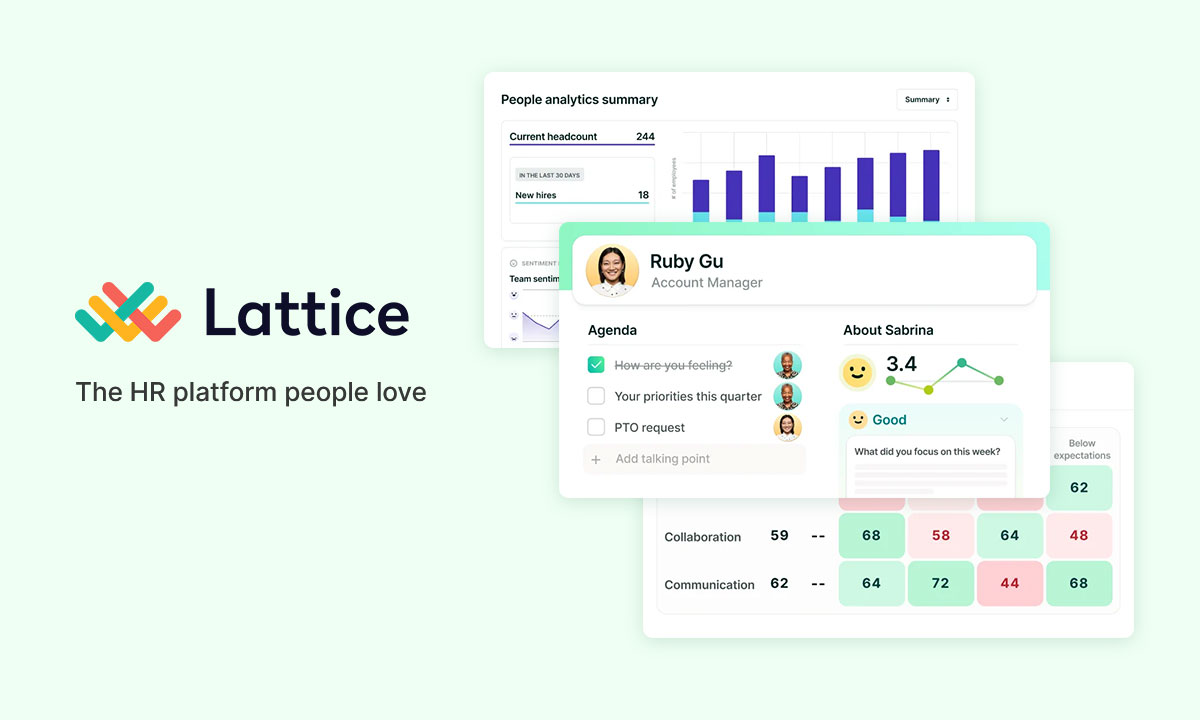
Lattice connects performance, goals, engagement, and compensation in one system. Its AI-powered insights help reduce bias and summarize feedback patterns, while flexible review cycles support annual, quarterly, and project-based evaluations.
Key strengths:
- Integrated OKR and goal management
- Customizable review cycles and 360 feedback
- Career development frameworks
- Engagement surveys and pulse checks
- Trusted by 5,000+ organizations including Anthropic, Gusto, and NPR
15Five
Best for: Teams prioritizing lightweight continuous feedback
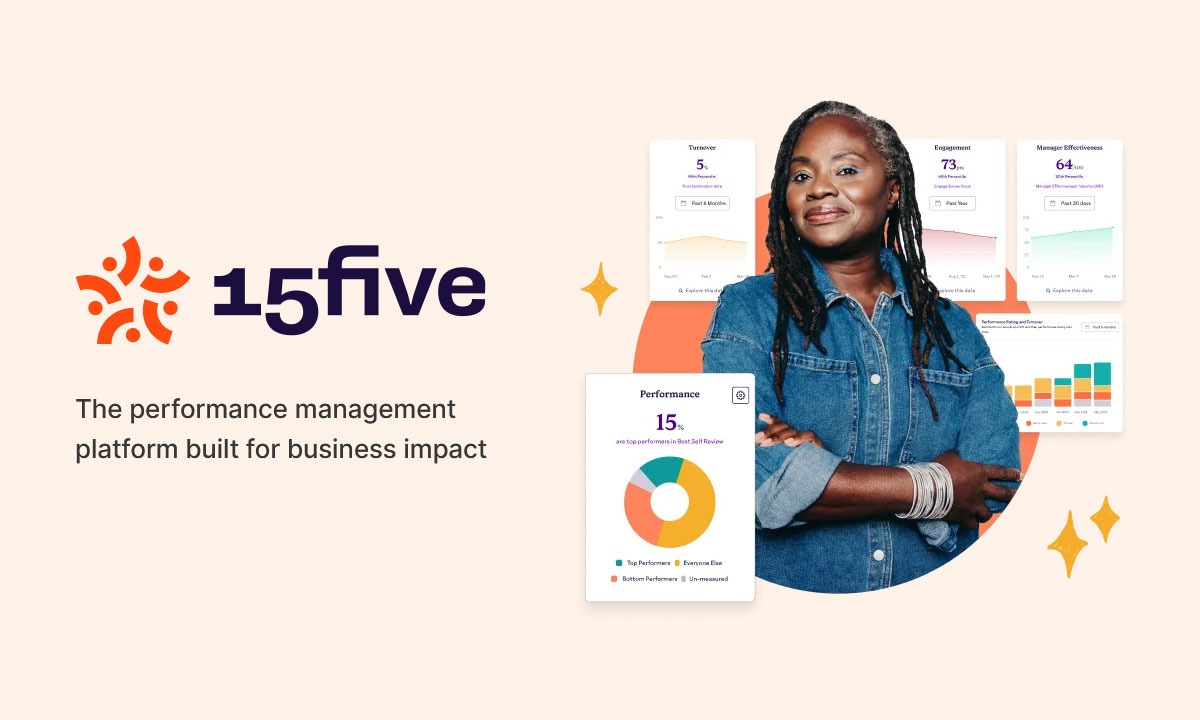
15Five pioneered quick weekly check-ins — 15 minutes for employees, 5 minutes for managers to review. This approach prioritizes regular communication over comprehensive but infrequent evaluations.
Key strengths:
- Weekly check-ins surface issues early
- High Five peer recognition builds team culture
- Manager coaching tools for difficult conversations
- Career hub for self-directed development
BambooHR
Best for: Small businesses wanting simplicity with their HRIS
BambooHR brings straightforward performance management to small businesses already using its HR platform. Claims include 80% less time on assessments and 90% less on process management.
Key strengths:
- Self-appraisal templates for employee ownership
- Automated review cycles with scheduling
- Goal tracking connected to team and company targets
- Mobile app for feedback anywhere
- Seamless integration with BambooHR's broader HR suite
Culture Amp
Best for: Organizations focused on culture and engagement analytics
Culture Amp combines performance reviews with deep employee engagement analytics. Science-backed survey questions and calibration features ensure consistent, fair evaluations.
Key strengths:
- AI Coach for balanced review drafting
- Benchmarking against industry standards
- Action planning tools with assigned owners
- Calibration features for rating consistency
- 360 feedback with multiple perspective collection
Common Performance Management Challenges (and How to Solve Them)
Manager resistance: Train managers on the "why" behind performance management, not just the "how." Show them that regular feedback actually saves time compared to dealing with performance problems that went unaddressed.
Employee anxiety: Make the process transparent. When employees know what to expect and understand the criteria, anxiety decreases. Regular informal feedback also removes the fear of surprises.
Bias in evaluations: Use structured evaluation criteria, calibration sessions, and multi-source feedback. AI-powered tools can flag language patterns that indicate bias before reviews are finalized.
Low adoption: Start simple. A system people actually use beats a comprehensive system they ignore. Build habits with minimal requirements, then add complexity gradually.
Goal misalignment: Review and update goals quarterly. Business priorities shift, and goals should shift with them. Static annual goals become irrelevant fast.
The Future of Performance Management
Performance management is evolving rapidly. Three trends are shaping what comes next.
AI-driven insights are moving from novelty to necessity. AI that generates review drafts, detects bias, predicts flight risk, and recommends development paths will become standard in the next few years.
Skills-based approaches are replacing role-based ones. As job descriptions become more fluid, performance management is shifting toward measuring and developing skills rather than evaluating performance against fixed job descriptions.
Employee-led development puts more control in the hands of individuals. The best systems will empower employees to drive their own growth, with managers shifting from evaluators to coaches and facilitators.
Effy AI runs this cycle for teams without an HR ops function — AI-assisted performance reviews, goals and 360 feedback, with a setup built for small businesses.
